Honda Research Institute Honda
   

Honda Research Institute Japan

Document Actions

Honda Research Institute Japan Co., Ltd. was founded in January, 2003, sharing the vision with our group companies in USA and Europe. Here we tackle the two key research fields; intelligent systems and plant genomics - particularly focusing on associative interacting intelligence and rice-genomic research respectively, in order to create new values with reality.

Wako Kazusa


Associative Interacting Intelligence

Although the computer has been developed as a numerical computational tool, it has become a core processor of many of our daily tools brought about by the harmonized contribution from programming and processor technologies. In fact, former super-computer technology has become indispensable in our daily lives. Even though we have access to powerful and fast processors, we are a long way from realizing an intelligent communication link between a human and a machine. It is definitely not for the lack of numerical computational power, but because the human brain and a conventional computer have very different process objectives. Communication by conventional computers is defined as a transfer data function between agents. On the other hand, human-like communication done by a brain is the result of learned behavior or from shared state interactions between agents. It is our intent to replicate the human-like interaction system. To achieve this goal we will focus on the following three research topics;


Brain-like Computer – The architecture of the brain is completely different from current computer systems. The ultimate brain-like computer will appear most likely with very specialized hardware. We will clearly build and explain its architecture by developing hypothetical brain models in parallel to creating potential hardware. We will then evaluate its interactive intelligence in a real world situation.
Brain-Machine Interface (BMI) – BMI is a new interface concept utilizing brain activities to control machines. To understand BMI, we will focus on the non-invasive measurement and decoding of natural brain activities that accompanies human states such as recognition, emotion, intention and motion. The anticipated results will provide fundamental novel man-machine communication technologies and novel algorithms for brain-like computing.
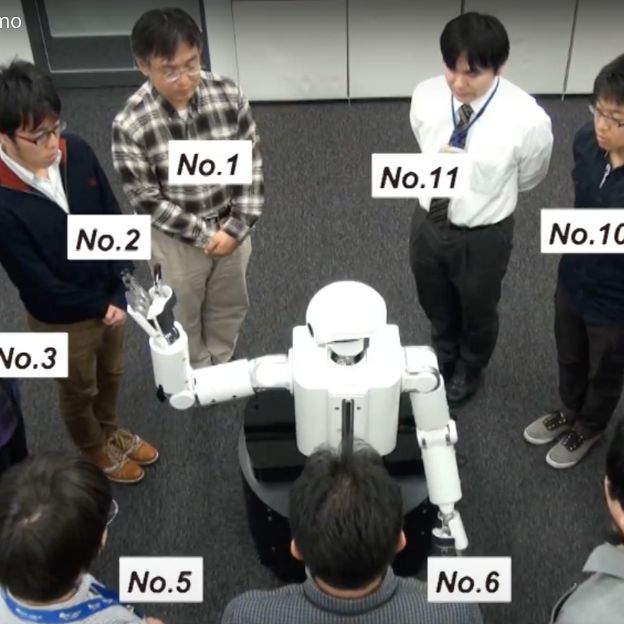
Human-Robot Interaction – Despite recent technological development of intelligent robots in areas such as speech, image, environmental understanding and behavior control, we are still far from building robots that can naturally, robustly, and adaptively interact with humans in real world situations. We are pursuing a novel intelligence model that will integrate individual technologies and learning techniques to achieve such human-robot interactions.


Plant Genomics

We also have a research activity in the field of plant genomics, one of the most promising scientific area in the new century. In recent years the explosion of DNA sequence information dramatically created an opportunity to investigate the function of plant genes. We started the rice genomic research project on December 1st 2000 based in Kazusa of Chiba prefecture. Rice is the most important cereal being relied by 50% of people in world and is a model crop of DNA research. And fortunately Japan has long history of rice breeding, and accumulated many research materials and knowledge. Our research focus is on the functional genomics of rice and the new molecular breeding technologies. We are in the process of development of gene information-based molecular breeding tools that are unique and valuable in a shortest time possible through pioneer researches of plant genome in order to meet the challenges in such areas as food and environment that the human kind is commonly faced with, and make contributions toward the progress of agricultural technologies of Japan. In the process, we intend to obtain gene patents as intellectual property. We also have collaborative research projects with Nagoya University, Kasetsart University in Thailand and some public institutes including Kazusa DNA Research Institute. As the first result of our collaboration with Nagoya University, we isolated the semi-dwarf gene -sd1 and contributed nature in 2002.

Created by admin
Last modified 2008-03-31 20:47